USE CASESFour facilities, one system
Same hardware. Different first sentence.
A gym buys a test members talk about. A clinic buys a number it can put in a report. A recovery centre buys a session that runs itself. An academy buys a roster on one station. Here is what each of them gets.
01Gyms and studios
A strength test members talk about.
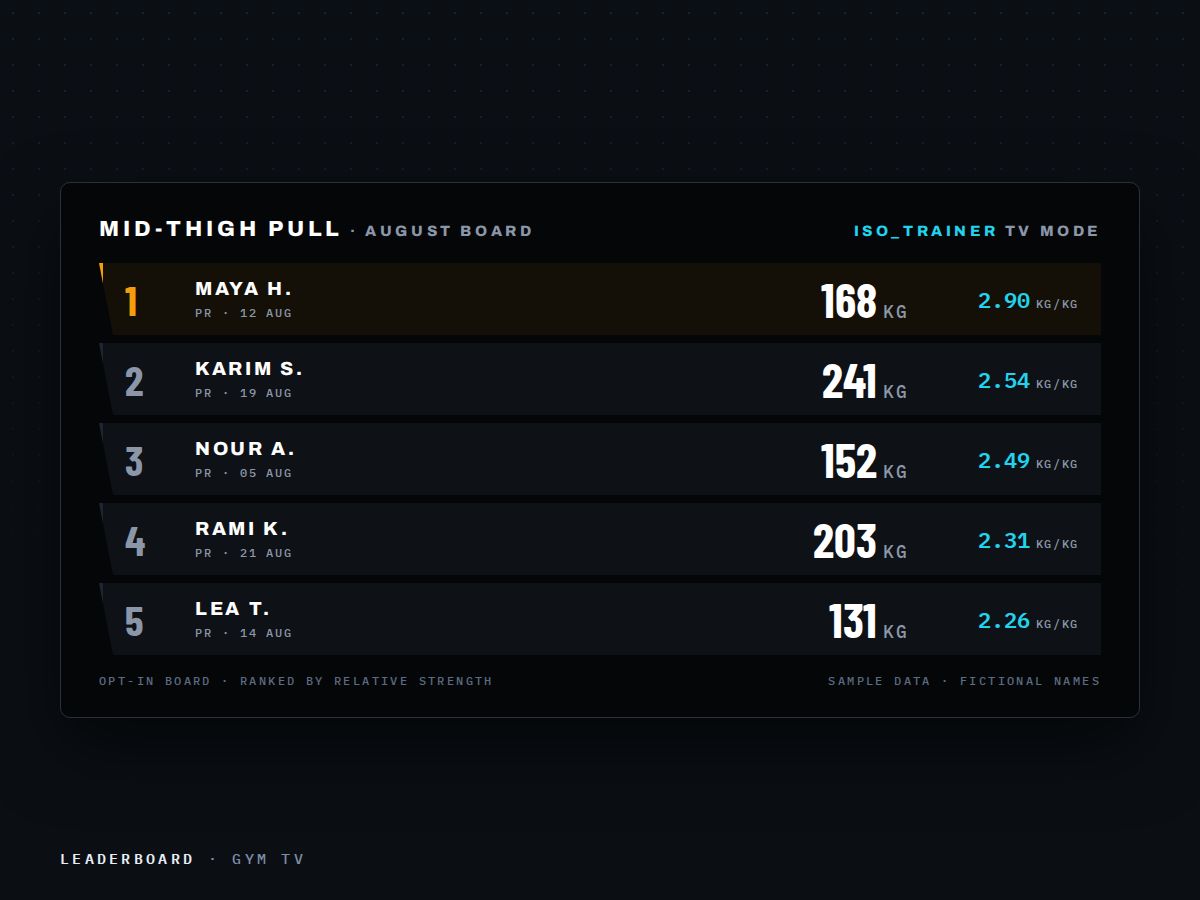
Three attempts, one number, and a leaderboard on the TV by the end of the week. Members who know their mid-thigh pull in kilograms come back to move it, and they bring the friend they beat.
- Differentiation. A measurement the gym down the street does not offer, on a device that fits in a coach's pocket.
- Retention. Personal records, PR cards members post, and opt-in leaderboards including relative-strength boards so lighter members compete fairly.
- Floor space. Anchors to the rack you already own. No footprint.
- Coaching product. Percentage-based isometric blocks sold as a PT add-on, with client packages and payment status tracked in the same app.
Start with
02Physiotherapy clinics
A documented baseline for every patient.
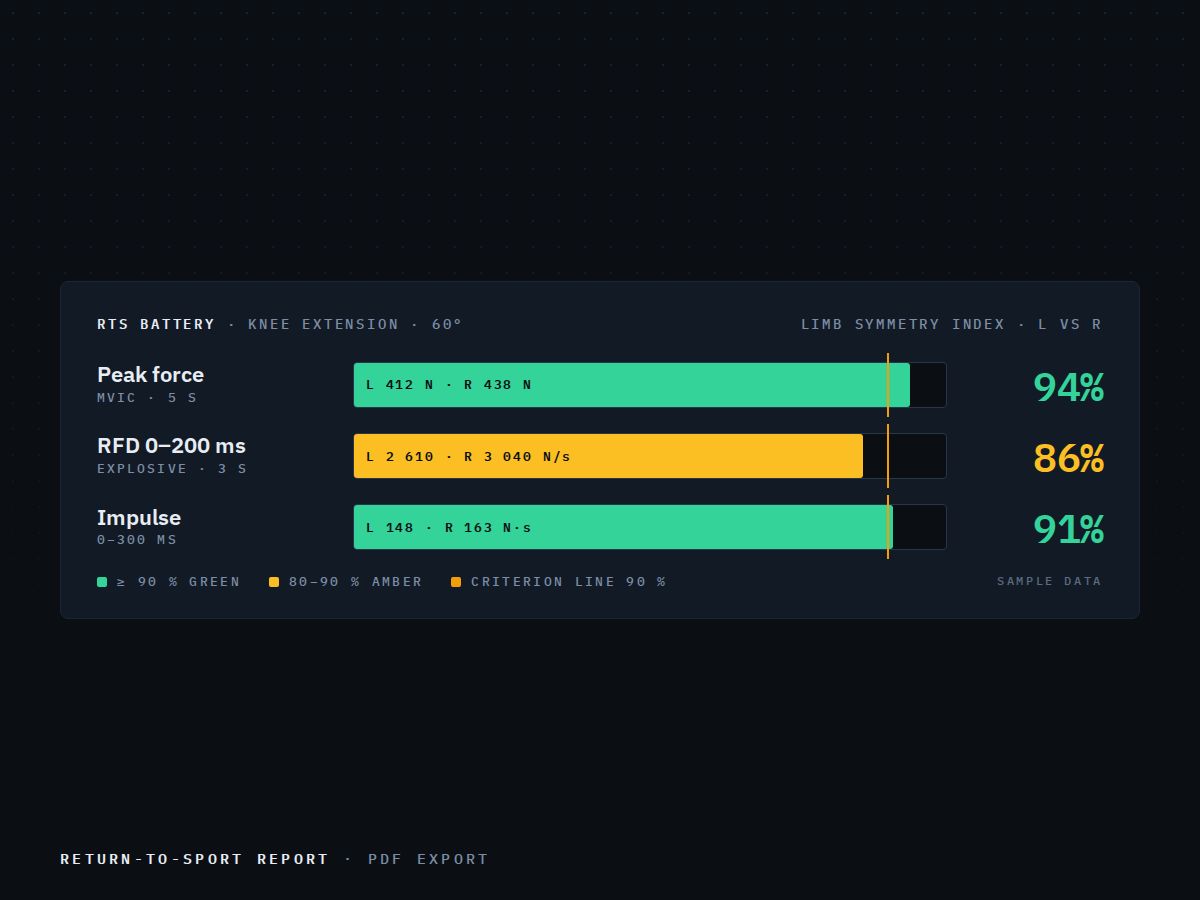
Return-to-sport decisions with limb symmetry per metric, not per impression. The report the referring surgeon can read without a phone call.
- Objective measurement. Peak force, RFD at 100, 200 and 300 ms and impulse, at a fixed joint angle the app records from the camera.
- Return-to-sport battery. Guided both-sides test, LSI bands against the ≥ 90 % criterion, side by side with the previous battery, exported as PDF.
- Tendon care. Scheduled loading sessions, a pain diary and a load-versus-pain chart for tendinopathy management.
- Governance. Clearance acknowledgement, cardiovascular flag with intensity cap, conservative ceilings on rehabilitation exercises, injury notes on the live screen.
Start with
03Recovery and wellness centres
A session that runs itself on screen.
Ten minutes of coached isometric holds, no technique to teach, no plates to load. The screen counts down, coaches the zone and saves the session. Staff involvement: pressing start.
- Throughput. Short, self-coached sessions on one anchor point. Clients rotate through without a trainer per station.
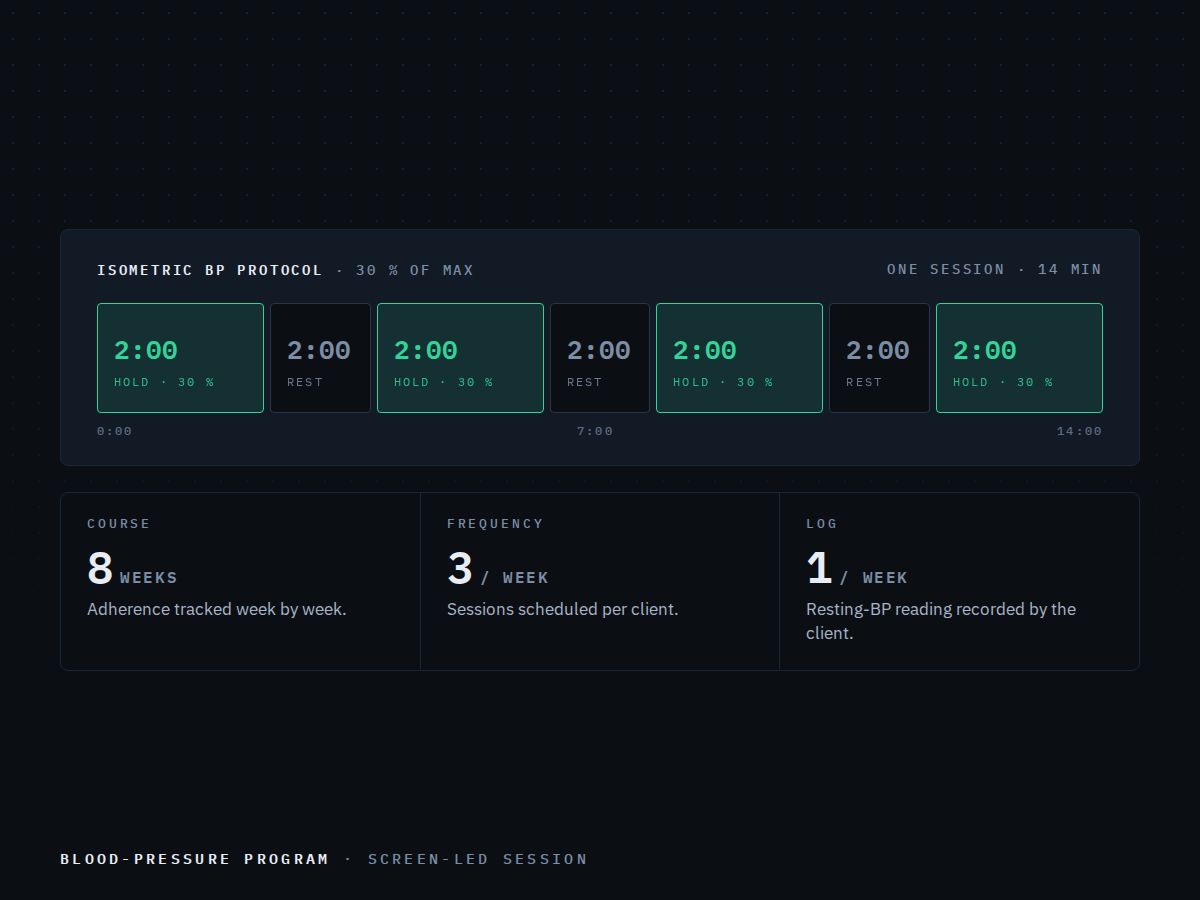
- Blood-pressure program. An eight-week course of four two-minute holds at 30 %, three times a week, with adherence tracking and a weekly resting-BP log. Supports healthy blood pressure; complements, never replaces, medical care.
- Add-on revenue. A measurable strength service beside compression and red light, sold as a course with packages tracked in the app.
- Experience. Force-tracing games and steadiness scores give clients something to improve that is not a heavier weight.
Start with
04Sports academies and teams
A full roster on one station.
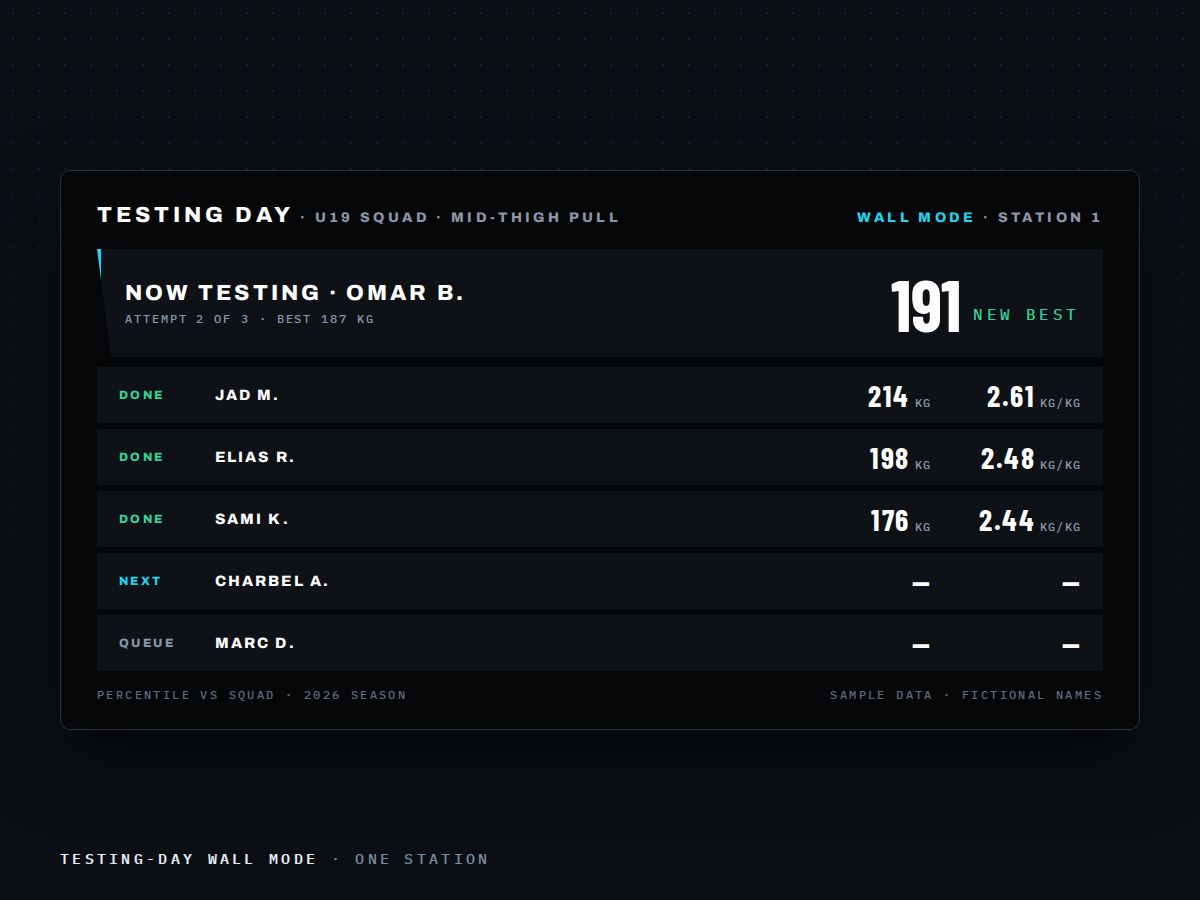
Testing-day wall mode runs the squad athlete by athlete and puts the results on the wall. Percentiles come from your own roster, not a published table from another sport.
- Testing days. Wall mode, standardised instruction, three attempts per athlete, results saved to each profile.
- Load management. Readiness check at session start, force-loss stop rule during repeated efforts, isometric session load trended weekly.
- Groin health. Weekly adductor squeeze monitoring with a relative-strength trend, the standard early-warning test in field sports.
- Benchmarking. Own-data percentiles per exercise, leaderboards per squad, CSV export for the performance staff.
Start with